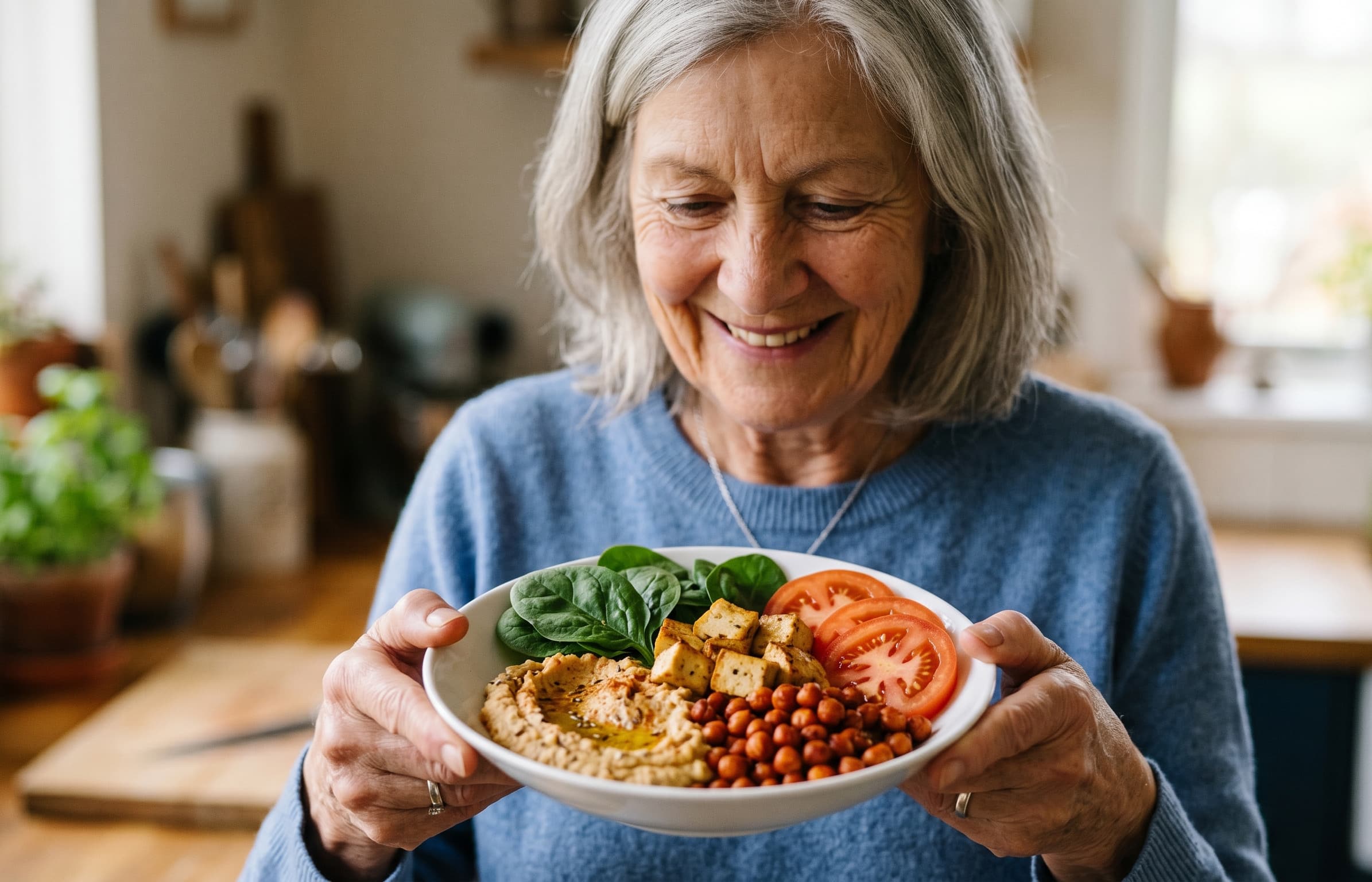
By Vegan Vienna Editorial | May 12, 2026 at 08:00 AM | 4 min read
We live in a time where almost everything is optimized. Productivity. Sleep. Fitness. Skincare. At the same time, many people still eat foods every single day that are known to increase inflammation, stress the cardiovascular system and contribute to chronic disease over time. That raises an increasingly important question: Can nutrition really influence how long and how well we live? The deeper you look into the science, the clearer the answer becomes. Nutrition is not just a side topic when it comes to health. It is one of the strongest long-term factors influencing the human body.
If you want matching places right after reading, start with all vegan restaurants in Vienna, the top 10 vegan restaurants or the vegan map.
A few years ago, I started becoming more interested in plant-based nutrition myself. At first, it was not even mainly about health. It started with a simple feeling of wanting to live more consciously. Paying more attention to what I consume, where things come from and how my body actually feels after eating.
Over time, I noticed something unexpected: not only did my eating habits change, but also my energy levels, focus and overall relationship with my body.
And this is where modern research becomes fascinating.
Recent studies suggest that predominantly plant-based diets can positively influence both lifespan and quality of life. Researchers from the University of Bergen found that people switching from a typical Western diet to a more plant-focused diet may statistically gain several additional years of life. Even people who change their eating habits later in life still seem to benefit significantly.
What matters most is not perfection or strict rules. It is the consistent presence of real, minimally processed foods in daily life.
What makes this even more interesting is that the same pattern appears in the parts of the world where people live the longest. The so-called Blue Zones such as Okinawa in Japan, Ikaria in Greece and Loma Linda in California have been studied for years because people there regularly live into their nineties and beyond.
Despite their cultural differences, they all share one major similarity: their diets are based largely on plants. Vegetables, legumes, whole grains, herbs, nuts and simple local ingredients form the foundation of daily meals, while meat is eaten rarely or in small amounts.
What personally strikes me most is not simply the number of years people live. It is the quality of those years. Today, many people live longer than previous generations, but often while dealing with chronic illness, exhaustion or declining mental and physical health.
The cardiovascular system clearly benefits from it. Research consistently shows lower cholesterol levels, lower blood pressure and reduced risk of heart disease among people eating mostly plant-based foods. Inflammatory markers linked to diabetes, obesity and vascular disease also tend to decrease.
The brain also appears to respond strongly to nutrition. Studies on plant-focused diets such as the MIND diet suggest that certain eating patterns may slow brain aging and help preserve memory, concentration and cognitive function over time.
What makes this so interesting is how ordinary these foods actually are. There is no magic product. No extreme detox plan. No unrealistic health trend. Just simple, real food.
At the same time, it is important to be honest about one thing: vegan does not automatically mean healthy. A diet built mainly around highly processed substitutes, sugar and fast food will not create the same long-term benefits.
Plant-based nutrition still requires balance, awareness and attention to nutrients such as vitamin B12, omega-3 fatty acids and iron.
For me personally, vegan nutrition changed something deeper than just what was on my plate. Eating became less impulsive and more intentional. I feel more stable, more focused and often calmer throughout the day. Not in a restrictive way, but in a way that feels more balanced and sustainable.
And maybe that is the real point of all this.
Health rarely comes from one dramatic decision. It comes from small habits repeated consistently over years. From the things we choose every single day.
If you really think about it, food is one of the few decisions we make multiple times daily that directly affects our heart, brain, cells and ultimately our future.
Science today points fairly clearly in one direction: a well-planned plant-based diet may help reduce chronic disease, support healthy aging and improve long-term quality of life. Not as a miracle solution, but as a long-term investment in the body we live in every day.
Not only how long we want to live. But how we want to feel while getting there.
🕒🌱 For many people, veganism is no longer about restriction. It is about awareness, long-term health and the kind of future they want to build for themselves, one meal at a time.
If this topic resonates with you, you might also enjoy our deeper look at why going vegan can be one of the most meaningful decisions of your life: Why Becoming Vegan Might Be the Best Decision of Your Life.